Árbær Open Air Museum is the historical museum of Reykjavík, on the site of an old farm a little way out of the city centre. Árbær had been an inn and a rest stop for travellers heading to and from the town before it was abandoned. In 1957 the city turned the ruined farm into a public park and open-air museum. Timber, turf and stone houses were moved here from the old town and rebuilt as a village of homes, a general store, a smithy and a church. The exhibitions inside cover how people in Reykjavík lived and worked.
Árbær Open Air Museum
Local name: Árbæjarsafn
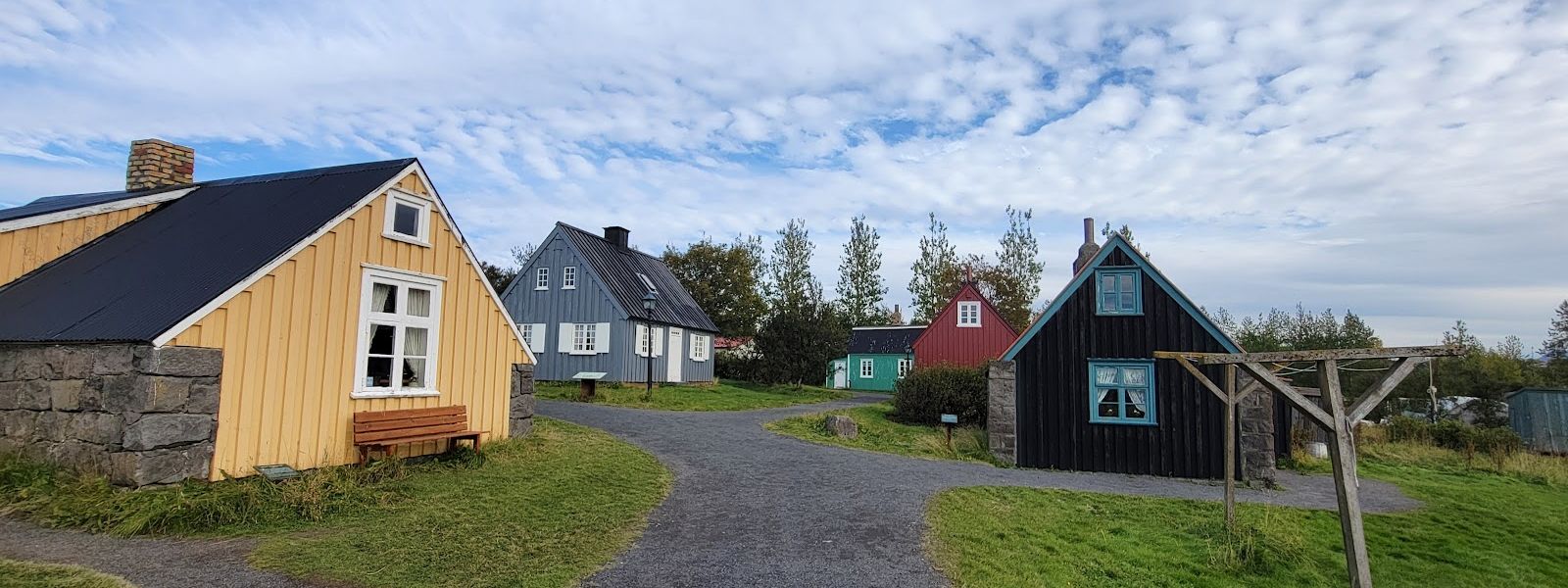
Of all the museum's houses, only the Árbær farm still stands on the spot it was built on — the others were taken apart in the old town and reassembled here.
- Entrance
- Admission is charged to go inside the buildings. Walking the open-air site without entering them is free, including outside opening hours. The Reykjavík City Card is accepted.
- Accessibility
- Wheelchair-accessible entrance, parking and toilet.
- Parking
- Free car park at the museum and free street parking beside it, with wheelchair-accessible spaces.
- Transport
- City buses serve the museum at roughly half-hour intervals; the stop is immediately outside the main entrance.
- Hours
- 1 June – 31 August: daily 10:00–17:00. 1 September – 31 May: one guided tour daily at 13:00, with no tour on Christmas Day, New Year's Day or Easter Sunday.
- Address
- Kistuhylur, 110 Reykjavík
What makes it special
Only the Árbær farm stands where it was built. The rest of the museum arrived house by house from the old town and was reassembled on the grounds of the derelict farm the city set aside in 1957. A shop from Laugavegur 62 is now the ticket office. Suðurgata 7 holds a wealthy family's home as it looked around 1910, a jeweller's workshop and a display of women's clothing. Efstibær, a 19th-century labourer's cottage, carries an exhibition on working life during the Great Depression. Landakot went up in 1897 as the first Catholic church in Iceland since the Reformation, and later became a gym. There are turf buildings among them, and in summer staff work the houses in period clothing.
Good to know
- Winter is a tour, not a wander: from September to May the museum is shown only by guided tour, once a day.
- Holidays: the winter tour does not run on Christmas Day, New Year's Day or Easter Sunday.
- Out of season the facilities close: the gift shop and most other services are shut through the winter.
- The grounds are free, the houses are not: a ticket is needed to go inside the buildings, not to walk between them.
- On site: toilets, a coffee shop in Dillon's House and the general store in Lækjargata 4.
Getting there
The museum is a little way out of the city centre, and the bus goes right to it. Services run at roughly half-hour intervals, and the stop is immediately outside the main entrance, so there is no walk in from the road. Drivers have a car park at the museum and street parking beside it. From the gate everything is on foot. The ticket office is the first house you reach — a shop front moved here from Laugavegur — and the rest of the site opens out behind it.
Best time to visit
Better: June to August, when the museum is open daily and you can walk the site at your own pace.
Avoid: September to May if you want to explore on your own — in the winter season the houses are shown only on a guided tour, once a day, and the shop and other facilities are closed.
Summer is also when the houses are staffed in period clothing, and that is the difference between this place and a room of display cases.
Things to do nearby
All tours in Reykjavík on GetYourGuide
Paid links: booking through them supports YowJourney.
Sun & daylight
Nearby Places


Similar Places



Your whole travel map in one place
Get inspired by new places around the world and find the ones worth the journey
Frequently asked questions
Is the museum open in winter?
Yes, but on a different footing. From 1 September to 31 May the site is shown by one guided tour a day, at 13:00. The tour does not run on Christmas Day, New Year's Day or Easter Sunday, and the gift shop and most other facilities stay closed until summer.Can you get there by bus?
Yes. Buses run to the museum at roughly half-hour intervals, and the stop is immediately outside the main entrance. The Reykjavík City Card is accepted at the museum and covers the bus fare.Do you have to pay to walk around the site?
No. Walking between the houses costs nothing, and the open-air site can be seen even outside opening hours. Admission is charged for going inside the buildings.Is there parking?
Yes. The museum has a free car park, and the street parking beside it is free as well. There are wheelchair-accessible spaces.Is the museum wheelchair accessible?
The entrance, the parking and the toilets are wheelchair accessible.