Grímsey Bird Cliffs are the sea cliffs of Grímsey, a small island 40 kilometres off the north coast of Iceland. They are steep along the entire coastline apart from the southwestern shore, where the island's only settlement stands, and the island rises to 105 metres. The cliffs carry breeding colonies of Atlantic puffins, black-legged kittiwakes, razorbills and common murres, and BirdLife International lists the island as an Important Bird Area. Access is by ferry from Dalvík or by plane from Akureyri.
Grímsey Bird Cliffs
Local name: Grímsey
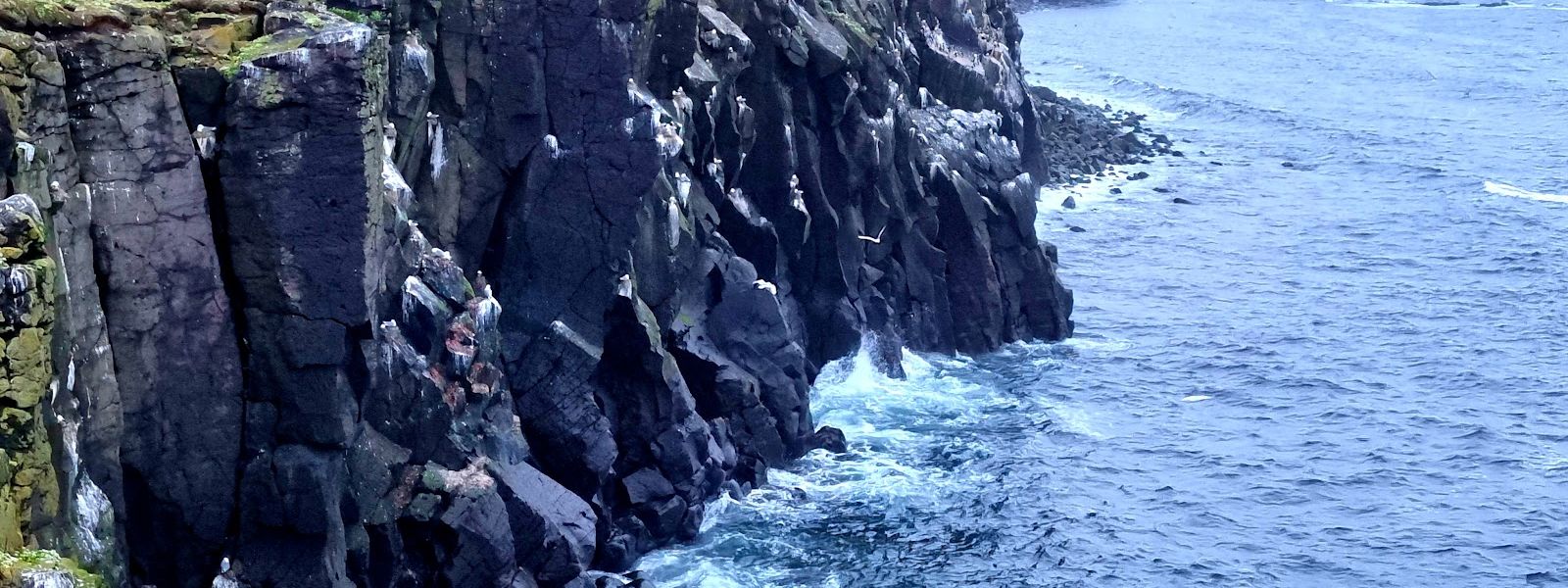
BirdLife International lists Grímsey as an Important Bird Area for the colonies on these cliffs: black-legged kittiwakes, Atlantic puffins, razorbills and common murres.
- Accessibility
- The walk to the cliffs is rocky and uneven and is hard going with limited mobility. A car with a driver can be hired on the island.
- Difficulty
- Walking route from the settlement north along a rocky, unsteady path that can be very muddy. Solid footwear needed.
- Transport
- Ferry from Dalvík three to five days a week, around three hours each way; flights from Akureyri to the island's airport, not daily.
- Advance booking
- Book a ferry place in advance. Flights do not run every day, so check the schedule first.
What makes it special
Steep cliffs run along the whole coastline of Grímsey except the southwestern shore, and the seabirds nest on them. BirdLife International lists the island as an Important Bird Area for its breeding colonies of black-legged kittiwakes, Atlantic puffins, razorbills and common murres. Puffins are what most people come for, and they pass close to the cliff edge. The island is treeless, so nothing blocks the view down the rock face or out to sea. Arctic terns and gulls nest here as well. Dolphins and whales are seen from the ferry crossing.
Good to know
- Services are limited. Bring water and snacks for the walk out to the cliffs.
- Winter cuts the visit short. Sailings are fewer and the time ashore is a fraction of a summer stop.
- Sheep graze along the route and leave the path in the state you would expect.
- No shelter. The island is treeless and the way to the cliffs is open to the wind, so take layers.
- Arctic Circle certificates are sold in the island's gift shop.
Getting there
Grímsey is reached by ferry from Dalvík, around three hours each way, or by plane from Akureyri. The airport sits on the west side of the island and the settlement on the southwest, and the cliff overlooks are reached on foot from there, heading north. The path is rocky and uneven. If you would rather not walk it, a car with a driver can be hired on the island, and bicycles can be rented. Winter sailings leave far less time ashore than summer ones.
Best time to visit
Better: summer, when the seabirds are on the cliffs and daylight lasts almost around the clock.
Avoid: winter, when there are fewer sailings and the time ashore is much shorter.
The birds are the reason to come, and they are here to breed. Long summer days also mean the full-day trip from Dalvík still leaves real time on the island rather than a dash from the pier and back.
Sun & daylight
Nearby Places
Similar Places

Grímsey Bird Cliffs on the map
Arctic terns nest beside the path and dive at anyone crossing their nesting section. Wear a hat or a hood and hold something above your head; tubes for that can be rented on the ferry. The cliffs are steep along the whole coastline apart from the southwestern shore. Stay back from the edge and keep children close.
Get directions

Your whole travel map in one place
Get inspired by new places around the world and find the ones worth the journey
Frequently asked questions
Which birds nest on the Grímsey cliffs?
Black-legged kittiwakes, Atlantic puffins, razorbills and common murres breed here, and the island is listed as an Important Bird Area for those colonies. Gulls and Arctic terns nest on the island as well.How do you get to Grímsey?
By ferry from Dalvík, which runs three to five days a week and takes around three hours each way, or by plane from Akureyri. Flights do not run every day, so check the schedule before planning the trip.Are the Arctic terns really a problem?
Yes. They nest along one section of the path and dive at people who pass through it. A hat or hood helps, and tubes to hold above your head can be rented on the ferry.Can you reach the cliffs without walking?
A car with a driver can be hired on the island, and bicycles can be rented. The walking route north is rocky and uneven, and it can be very muddy.Is a winter trip worth it?
The crossing runs in winter, but sailings are fewer and the stop ashore is much shorter, which limits how far north along the cliffs you get. Summer gives long daylight and the birds on the rock.