Orbis et Globus is a concrete sphere on Grímsey, an island around 40 kilometres off the north coast of Iceland. It marks the point where the Arctic Circle crosses the island, and Grímsey is one of the few places where the circle can be crossed on land. The monument is plain: a large ball of concrete standing on open ground. The reason to walk out to it is the line it marks, and the seabird cliffs along the way.
Orbis et Globus
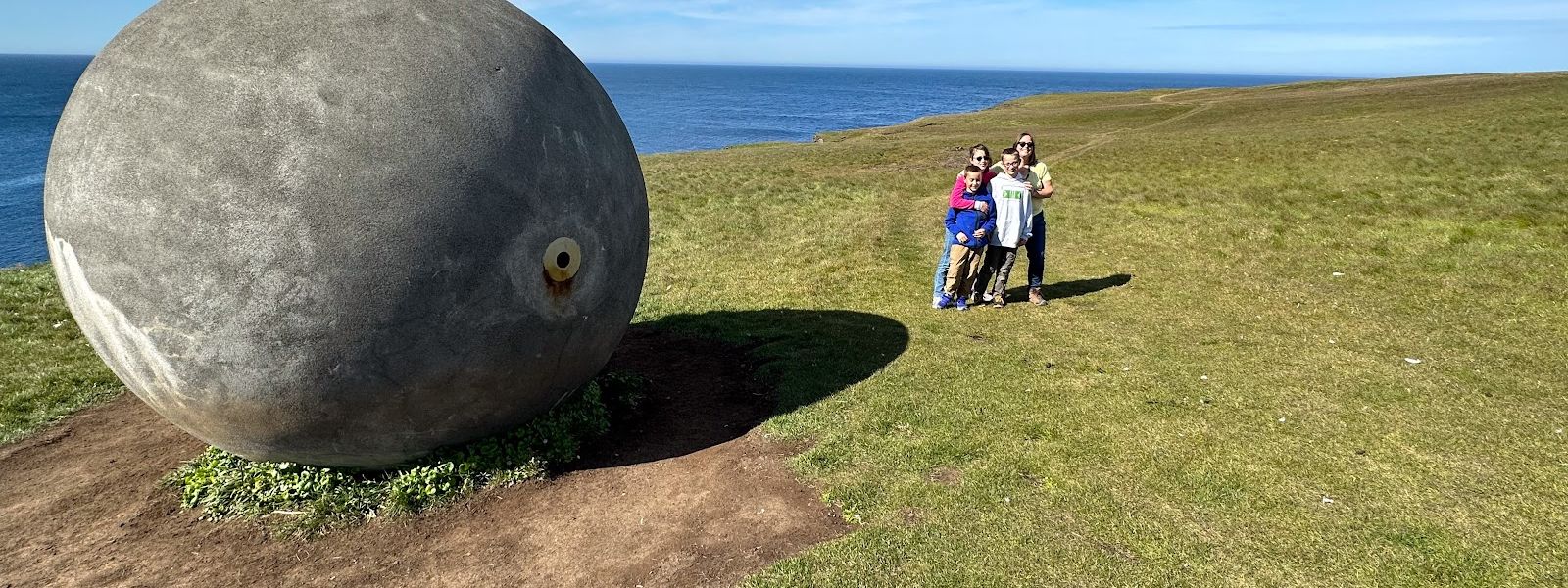
The Arctic Circle drifts north every year, so the sphere is moved to keep up with it.
- Entrance
- Free.
- Accessibility
- Not wheelchair accessible: no step-free entrance and no accessible parking. The approach is a path with a climb near the end.
- Difficulty
- Well-established path with some elevation gain and a slight climb in the final stretch.
- Transport
- Grímsey is reached by ferry or by plane; the monument is a walk from the harbour or from the airport.
- Hours
- Open 24 hours, every day.
What makes it special
The sphere is plain concrete, and the interest is not in the object but in what it marks. The Arctic Circle crosses Grímsey here, and the line drifts north a little each year, so the sphere is moved to follow it. Walk on past the monument towards the north end of the island and you will find markers for where the circle stood in earlier years and where it will stand in future ones. That detour needs time of its own, so allow for it before setting off. In the nesting season the cliff edges along the path are crowded with puffins.
Good to know
- Ferry day trips: a few hours ashore are enough to walk out to the sphere and back.
- Wind: the monument stands on open ground with nothing to break the wind. Bring a windproof layer.
- Certificate: Arctic Circle certificates are issued at Galleri Gullsól, not at the monument.
- Puffins are seasonal: thousands nest on the cliffs along the path around spring; outside that window the walk is quiet.
Getting there
Orbis et Globus is reached on foot. Allow 30 to 40 minutes from Sandvík, and about 40 minutes from the airport, on a well-established path. The sphere comes into view early on, so there is little chance of losing the way. The ground rises as you go, with a slight climb towards the end. None of it is extreme.
Best time to visit
Better: late spring, when thousands of puffins nest on the cliff edges along the path.
Avoid: a tight turnaround from the ferry if you also want the date markers north of the sphere — that detour needs time of its own.
The walk is as much of the visit as the monument, and in the nesting season the cliffs are busy for most of the way.
Sun & daylight
Nearby Places

Similar Places


Orbis et Globus on the map
Grímsey is a small, exposed island with unfenced sea cliffs and weather-dependent ferries and flights — check conditions, allow buffer time, and keep clear of the cliff edges and nesting birds.
Get directions

Your whole travel map in one place
Get inspired by new places around the world and find the ones worth the journey
Frequently asked questions
How long does the walk to Orbis et Globus take?
Between 30 and 40 minutes each way from Sandvík, and about 40 minutes from the airport. The path is well established, with a slight climb near the end.Can it be visited on a ferry day trip?
Yes. A few hours ashore are enough to walk out to the sphere and back.Where is the Arctic Circle certificate issued?
At Galleri Gullsól, not at the monument itself.Is there anything beyond the sphere worth walking to?
Yes. Towards the north end of the island there are markers for past and future positions of the Arctic Circle. Allow extra time for them.When are the puffins on the island?
Around spring. In late May the cliffs along the path are crowded with them.