Heiðmörk is a conservation area within the municipal boundary of Reykjavík, proclaimed in 1950 and now covering 3,200 hectares. It lies about 10 km from the city centre, south-east of Lake Elliðavatn, in Iceland's Capital Region. Lava and heathland here have been planted over with forest: 820 hectares of conifer and 650 hectares of birch. Reykjavík's water reservoirs and drinking water wells are inside the reserve. It is the main outdoor recreation area of the capital region.
Heiðmörk Nature Reserve
Local name: Heiðmörk

Since 1950 more than four million trees have been planted here, on ground that was lava and open heathland.
- Entrance
- Free
- Accessibility
- Wheelchair-accessible entrance and wheelchair-accessible parking.
- Parking
- Parking at the reserve, including wheelchair-accessible spaces.
- Difficulty
- Walking on forest roads and made paths, with rest stops along the way.
- Transport
- Self-drive — signed entrances off Route 1
- Hours
- Open 24 hours, every day.
What makes it special
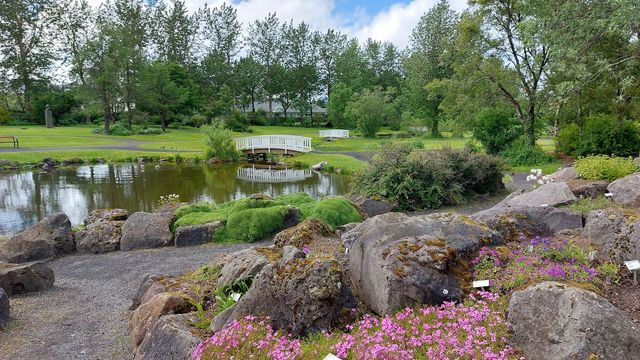
Iceland has little woodland, and this is where Reykjavík planted its own. More than four million trees have gone in since 1950, and 26 tree species now grow here. The Sitka spruce is the most prominent. At least 150 wild flower species have been counted, and more than 60 species of wild bird, mostly around Elliðavatn and Myllulækjartjörn.
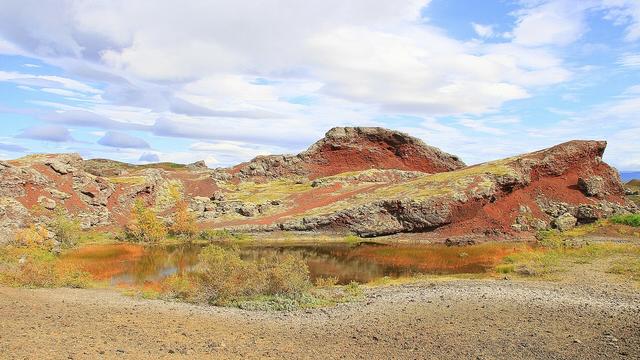
The reserve is volcanic ground as well. Rauðhólar, a cluster of red pseudocraters, was protected as a natural monument in 1961 and opened as a public field in 1974. Much of the planting is still done by volunteer groups, who hold about 140 allotted plots and lay out paths and benches on them. Surveys count more visitors in Heiðmörk than in the national park at Þingvellir.
Good to know
- Shared paths. Horses use the tracks, and there is manure on them. Watch your footing.
- This is Reykjavík's water supply. The city's reservoirs and drinking water wells sit inside the reserve.
- Autumn picking. Blueberries and mushrooms grow in the woods.
- Dogs are allowed, and the place suits children.
- Signs along the way. The paths carry information and educational signs, and there are rest stops.
Getting there
Heiðmörk lies about 10 km from central Reykjavík, south-east of Lake Elliðavatn, and the approach is by road. There is parking at the reserve, and from there the woods are walked on forest roads and made paths.
Best time to visit
Better: autumn, for blueberries and mushrooms under the trees.
Avoid: midwinter, if the point of the trip is flowers and birds.
Heiðmörk is planted forest, so the year reads differently here from most of Iceland. The conifers hold their colour in winter, and the reserve is walked in every season. The wild flowers and the birds around Elliðavatn and Myllulækjartjörn belong to the warm months.
Sun & daylight
Nearby Places


Similar Places





Your whole travel map in one place
Get inspired by new places around the world and find the ones worth the journey
Frequently asked questions
How far is Heiðmörk from Reykjavík?
About 10 km from the city centre. The reserve lies south-east of Lake Elliðavatn and covers 3,200 hectares.What are the Rauðhólar?
A cluster of red pseudocraters in the lava within Heiðmörk. They were protected as a natural monument in 1961 and made a public field in 1974.Who planted the forest?
Reykjavík Forestry Association has run the afforestation since planting began in 1949, together with the city's municipal work school and volunteer groups. About 140 plots are allotted to those groups.Where does the name come from?
From Hedmark in Norway, an area of deep forests. Both names come from the Old Norse Heiðmǫrk.