Hvitserkur is a 15-metre basalt stack on the eastern shore of the Vatnsnes peninsula, in northwest Iceland. It stands in shallow water off a black-sand beach, and two holes at its base give it the outline of a dragon bending to drink. A gravel road leads to a car park above the shore, where a viewing platform overlooks the rock and a short path drops to the sand. Seals use the gravelbanks nearby. Local tradition calls the stack a petrified troll.
Hvitserkur Rock
Local name: Hvitserkur
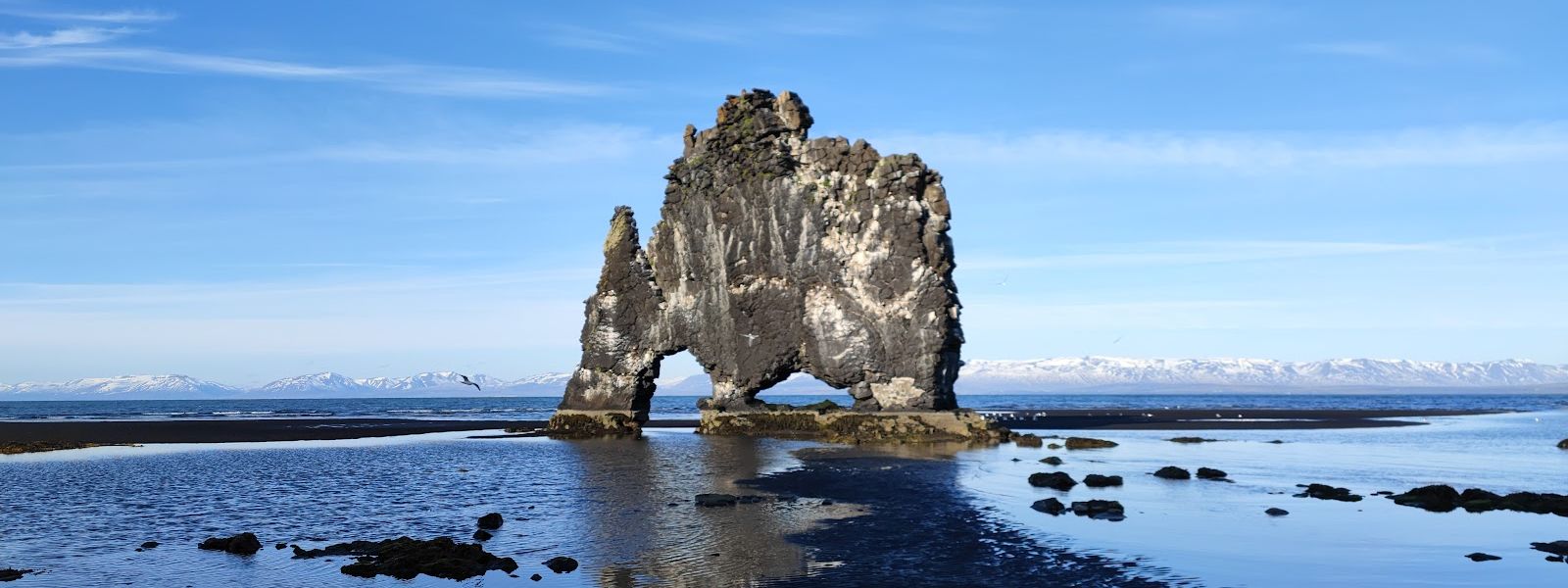
In the mid-20th century local farmers poured concrete around the base to stop the sea toppling the troll.
- Entrance
- Free entry; parking is paid via an app.
- Accessibility
- No wheelchair access. Surfaces are gravel throughout, and the path down to the beach is steep and rocky.
- Parking
- Gravel car park about 350 metres from the rock; paid, via an app. The same payment covers the WC and cafe nearby. A second car park lies about a kilometre away.
- Difficulty
- Easy to the viewing platform: a short track from the car park. Down to the beach it is a few minutes over steep, loose rock, unmarked.
- Transport
- Self-drive — Route 711, Vatnsnes
- Hours
- Open 24 hours.
- Address
- Vatnsnes, 711
What makes it special
Two holes at the base leave the stack standing on legs. The shape suggests a dragon bending to drink; from other angles, a rhino. Local tradition explains it differently. A troll set out to wreck the monastery at Þingeyrar, was caught by the rising sun and turned to stone.
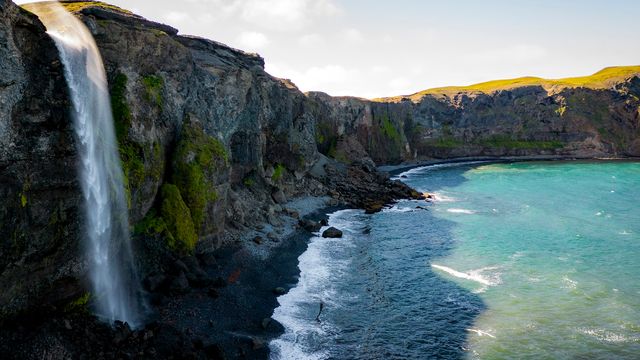
The base is partly concrete. In the mid-20th century farmers, worried that the sea would undercut the troll and topple it, reinforced the foundations. A small waterfall runs into the sea nearby, and seals haul out on the gravelbanks along the shore.
Good to know
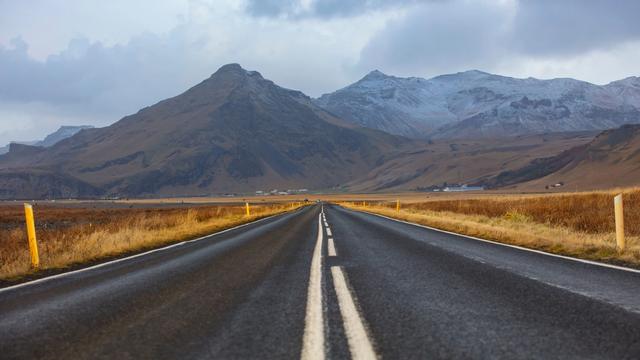
- The road in is gravel. The surface is rough in places. Allow extra time and keep the speed down.
- No toilets at the rock. The nearest WC and cafe are back at the car park.
- The beach is reached by a steep, rocky path. It is short but unmarked, and the footing is loose.
- Keep off the gravelbanks. Birds nest there and seals haul out, and trampling by visitors is already damaging both.
- The tide decides the visit. At high tide you cannot get close to the stack; low tide opens up the beach.
Getting there
The last stretch is unsurfaced gravel, rough in places but driveable. Cars stop at a gravel car park about 350 metres from the rock, with a second car park roughly a kilometre out. A track runs from the car park to a viewing platform above the shore, and most people see Hvitserkur from there. Going down to the black-sand beach means a short scramble over steep, rocky ground. It takes only a few minutes, but the path is unmarked and the footing is loose.
Best time to visit
Best: low tide, and about two hours before low tide if you want to see seals.
Avoid: high tide, when you cannot get near the stack.
The tide matters more here than the season. At low water the beach opens up and you can walk closer to the rock. Seals haul out on the bank opposite the beach that the car park trail leads to, and they swim off as the water rises.
Sun & daylight
Nearby Places

Similar Places


Featured in our guides
Hvitserkur Rock on the map
There are no marked paths. The descent from the viewing platform to the beach is steep and rocky, and the ground is loose underfoot.
Get directions

Your whole travel map in one place
Get inspired by new places around the world and find the ones worth the journey
Frequently asked questions
How tall is Hvitserkur?
The stack is 15 metres high. Two holes at its base leave it standing on legs, which is where the drinking-dragon comparison comes from.Can you get down to the beach?
Yes. A short, steep path of loose rock runs from the viewing platform down to the black sand. It is unmarked, and the view from below is worth the descent.Are there seals at Hvitserkur?
Seals haul out on the gravelbanks along the shore, including the bank opposite the beach the car park trail leads to. Come about two hours before low tide.Is the base of the rock really concrete?
Partly. The sea had eroded the foundations, and farmers reinforced them with concrete in the mid-20th century so the stack would not fall.What is the road there like?
Gravel, and rough in stretches. It is passable, and Icelandic horses graze along the way, but it is not a road to hurry on.