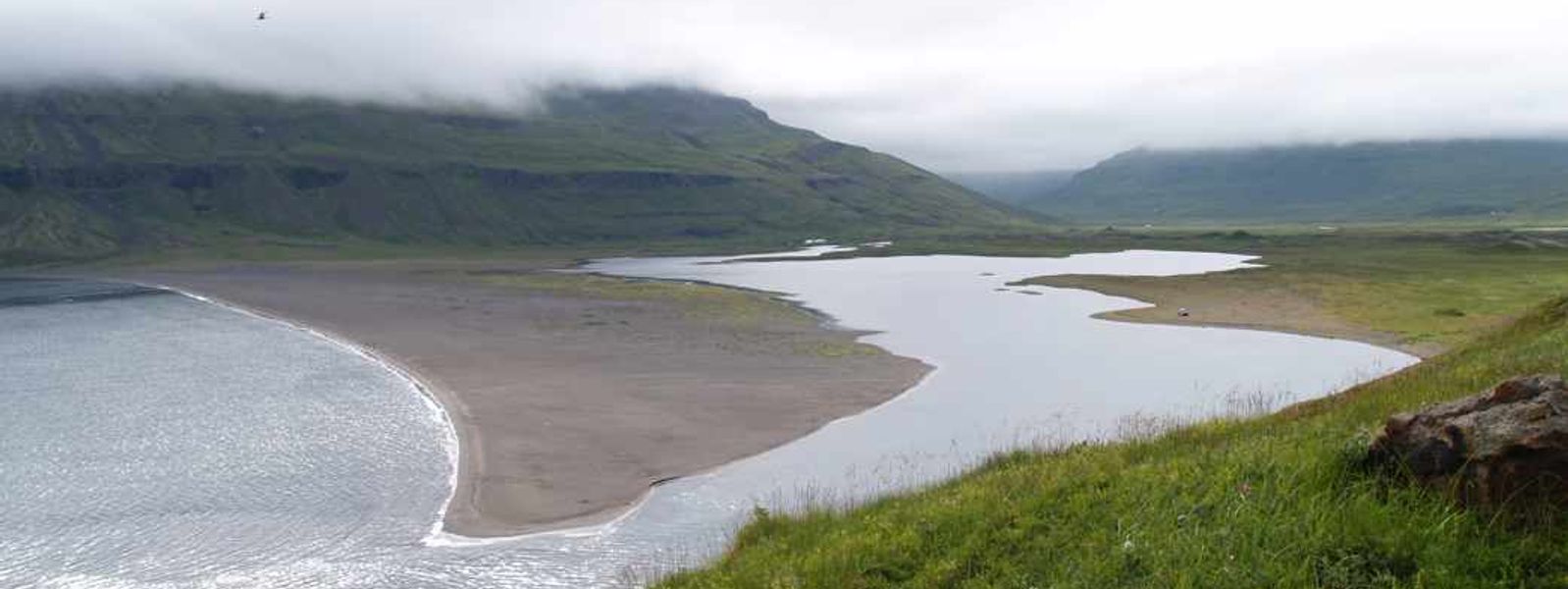
Loðmundarfjörður is a fjord on the east coast of Iceland, in the Múlaþing municipality, set between Seyðisfjörður and Borgarfjörður eystri. Mountains close it on both sides, a river crosses the flat valley floor, and the shore is dark sand and stone. The farms that once worked the valley stand empty, and the church at Klyppsstaður is kept up above them. There is no village left in it.
- Entrance
- Free — open country, no gate and no ticket.
- Parking
- One gravel car park, free of charge, about 1.5 km from the fjord.
- Transport
- None — the nearest bus stop is more than 5 km away.
- Advance booking
- Nothing to book, and nobody to book with.
- Hours
- No opening hours; the fjord is open whenever the road in is passable.
- Address
- F946, 721, Iceland
What makes it special
Grass has grown over the walls of the old farms, and the church at Klyppsstaður stands on its own with the mountains behind it. Nobody lives in Loðmundarfjörður. The fjord keeps everything a settled valley has — a green floor, a river running through it, slopes rising on both sides — and none of the people. The sound is the first thing you notice: the river, birds, boots on gravel, then long stretches of nothing at all. Google files the place as a hiking area, which is fair enough, because walking is what there is to do here.
Good to know
- Bring water. There is no drinking water and no toilet anywhere near the fjord — carry water in and rubbish out.
- Nothing explains the place. There is no information board at the fjord, so the farms and the church come without a word of context.
- Nobody lives here. Whatever goes wrong, you deal with it yourself; come equipped for that.
- Rain leaves you with little. With cloud down on the mountains, the fjord gives you wet grass and not much else.
Getting there
You arrive by road and finish on foot. No bus, no shuttle, nobody selling a lift: the vehicle you drive in is the vehicle you leave in, and the car park sits back from the fjord rather than in it. From there on, everything is walked.
Nothing at the parking area tells you where you are or what lies ahead — no board, no map — so work out the lie of the fjord before you set off. Once you are down in it, the valley floor is open and green and the whole of it reads at a glance, mountains on either side and the sea at the end.
Access & restrictions
Driving off the track is illegal everywhere in Iceland, and tyre ruts in moss and gravel stay visible for years — keep the vehicle on the road and park where the ground is already worn.
The empty farmhouses are private property even with nobody in them: photograph them from outside and leave doors as you found them. The church at Klyppsstaður is kept up and still in use, so treat it as you would any church in use. Take nothing away with you — the timber, iron and stone lying in the grass are what is left of the people who farmed here.
Sun & daylight
Nearby Places


Similar Places



Your whole travel map in one place
Get inspired by new places around the world and find the ones worth the journey
Frequently asked questions
Does anyone live in Loðmundarfjörður?
Not permanently. The farms that once worked the valley stand empty, and the church at Klyppsstaður is the building still kept up.Is there drinking water or a toilet at the fjord?
No. Neither is available anywhere near the fjord, so bring what you need for the day and take your rubbish back out with you.What is there to do there?
Walk. Google files the fjord as a hiking area, and the open valley floor, the river and the abandoned farms are what you come to look at.Is there anything on site explaining the ruins?
No. There is no information board at the fjord; whatever you know about the farms, you bring with you.