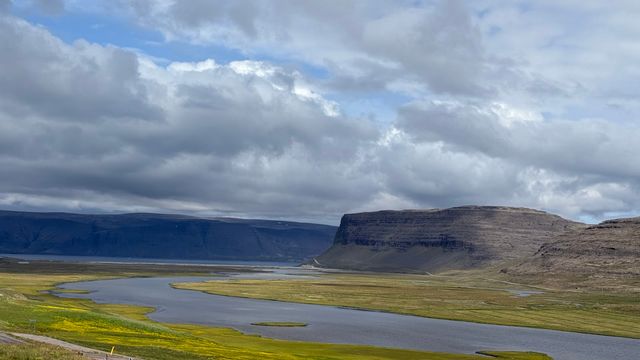
Hornstrandir is Iceland's northernmost peninsula, at the top of the Westfjords, north of the Jökulfirðir fjords and northwest of the Drangajökull glacier. It covers 580 km² of tundra, fjord, glacier and alpine ground, protected as a nature reserve since 1975 under some of the strictest conservation rules in the country. The last farming families left in the 1950s. There are no roads, and access is by boat from Ísafjörður. People come for the Arctic foxes, the bird cliffs above Hornvík and days of walking without meeting anyone.
Hornstrandir Nature Reserve
Local name: Hornstrandafriðland
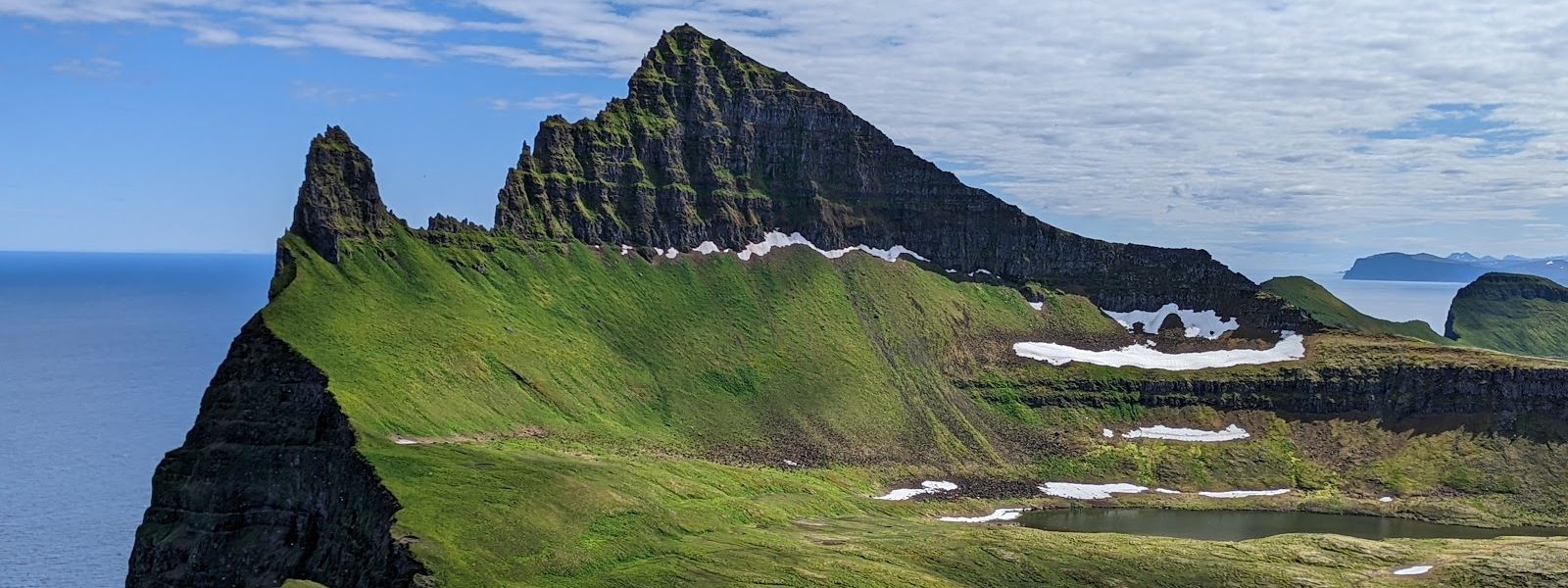
The moss underfoot takes between 59 and 100 years to grow as thick as it is, and a single step kills a patch of it.
- Accessibility
- No wheelchair-accessible entrance or parking. Access is by boat, and everything past the landing is on trails from level coastal ground to steep mountain paths.
- Difficulty
- Trails range from level ground along the coast to steep mountain paths. The round trip from the landing to the cliff takes five to seven hours.
- Transport
- No public transport. Boats to the reserve sail from Ísafjörður; operators include West Tours and Borea Adventures.
- Advance booking
- Access is by booked boat trip or guided hike. Booking through a cruise line can cost close to double the operator's own price.
- Hours
- Open 24 hours.
What makes it special
Arctic foxes are the reason most people come. Hunting is banned across the reserve, and the foxes are seen often rather than luckily. The second draw is the bird cliffs around the bay of Hornvík, which rise more than 500 metres on the eastern side and hold seabirds in vast numbers. The third is the emptiness. There are no roads and almost no buildings, and walkers can go for days without meeting anyone. Seals and seabirds fill out the wildlife list, and humpback whales turn up on the boat crossing. The ground itself is the fragile part. The thick moss takes between 59 and 100 years to grow, and a single step kills a wide patch of it.
Good to know
- No signal: Hesteyri has no mobile or internet coverage, and reception elsewhere in the reserve cannot be relied on.
- No facilities: the only amenities are occasional outhouses. Camping is allowed in designated areas only, so know where yours is before you set off.
- Wind: the flats are exposed and tents have snapped there. Bring one built for wind.
- Weather: in rain and fog the cliff views vanish. Check the forecast before you commit to a boat.
- Insects: summer brings a lot of bugs, though biting is not the main problem.
Getting there
There is no road into Hornstrandir. Boats run from Ísafjörður, and the crossing takes two to two and a half hours. On a choppy sea it is a rough ride, so hold on. From the landing, everything is on foot. Trails range from level ground along the coast to steep mountain paths, and the round trip out to the cliff and back takes five to seven hours. Cruise passengers have an easy short walk from the cruise port to the boat.
Best time to visit
Better: summer, and only on a clear forecast.
Avoid: days of rain and fog.
The point of the long walk out is the view from the cliff, and in low cloud there is nothing to see from it. Snow patches linger on the higher ground into August, though they can be crossed without spikes. By the end of summer the nights are dark enough for the aurora.
Access & restrictions
Hornstrandir has been a protected nature reserve since 1975, under some of the strictest conservation rules in Iceland. Hunting is banned, which is why the Arctic foxes are so easy to see. Camping is permitted in designated areas only. Much of the land is privately owned by descendants of the families who left in the 1950s and later rebuilt their houses, so the buildings are homes, not ruins. The moss is the thing to watch. It takes 59 to 100 years to reach the thickness you see, and one boot destroys a wide patch. Stay on the trails.
Sun & daylight
Nearby Places

Similar Places


Featured in our guides
Hornstrandir Nature Reserve on the map
Wind on the open flats is strong enough to snap tent poles. There is no mobile coverage across most of the reserve and no facilities beyond the occasional outhouse, so a broken camp becomes a serious problem. The cliffs above Hornvík rise more than 500 metres — stay back from the edge. The boat crossing is rough in a choppy sea.
Get directions

Your whole travel map in one place
Get inspired by new places around the world and find the ones worth the journey
Frequently asked questions
Can you drive to Hornstrandir?
No. There is no road into the reserve. Boats run from Ísafjörður and the crossing takes two to two and a half hours. Everything beyond the landing is on foot.How likely is it to see an Arctic fox?
Likely. Hunting is banned here and the foxes have made the peninsula their stronghold. Seals and seabirds are common too, and humpback whales are sometimes seen from the boat.Is there anywhere to stay or eat?
No. The reserve has no infrastructure and the only amenities are occasional outhouses. Camping is allowed in designated areas only, so plan your nights before you sail.Is there phone signal?
Not at Hesteyri, which has neither mobile nor internet coverage. Reception elsewhere in the reserve cannot be relied on, though there is service at the top of the Horn.Are spikes needed for snow in summer?
Snow patches remain on the higher ground into August. They can be crossed without spikes.