Klifbrekku Cascade Waterfalls fall in a stacked run of tiers rather than one drop, on a mountainside in Fjarðabyggð, in East Iceland. The layered shape is what people come for, and it is also what photographs badly: no single frame holds all of it. The approach is about 20 km of gravel road, well maintained, but not a road on which to learn gravel driving. There is a free car park at the site. The detour keeps numbers low, and having the falls to yourself is a normal outcome here.
Klifbrekku Cascade Waterfalls
Local name: Klifbrekkufossar
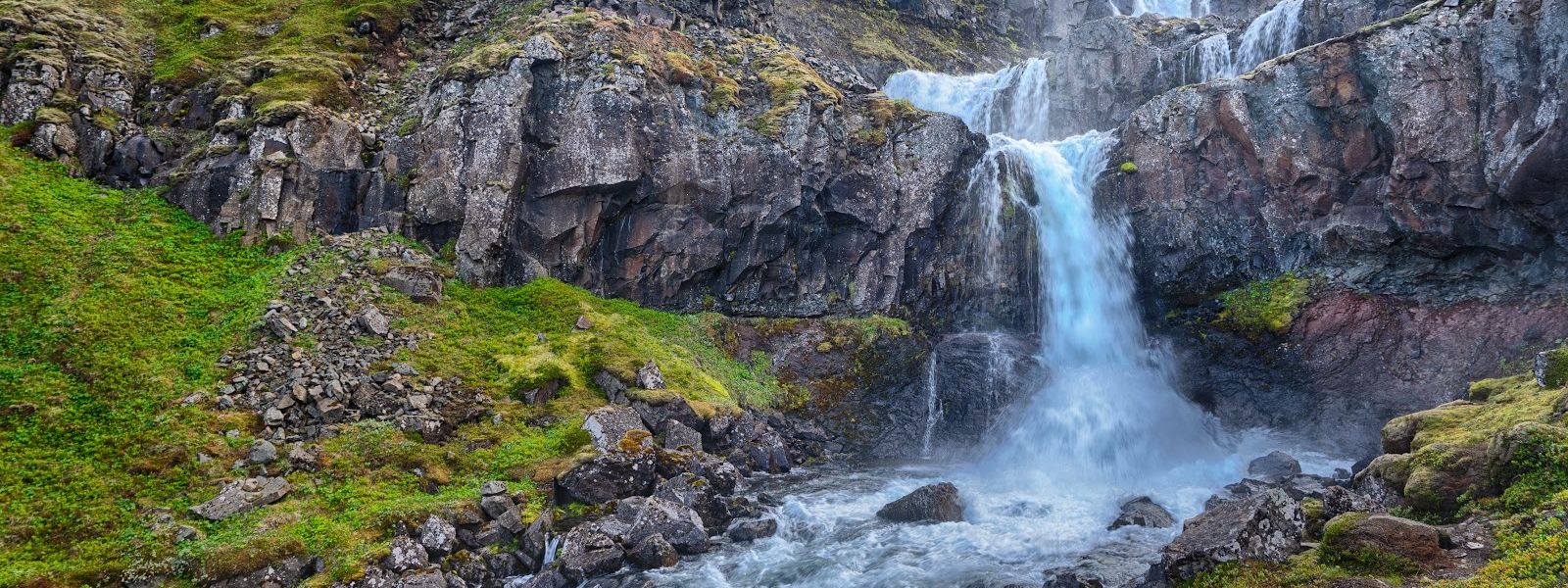
Roughly 20 km of gravel road is the entire approach, and it usually buys you the falls with nobody else there.
- Entrance
- Free, no ticket.
- Accessibility
- No wheelchair-accessible parking and no wheelchair-accessible entrance.
- Parking
- Free car park at the site. Informal pull-outs along the road nearby give other views of the falls.
- Difficulty
- Short walk from the car park to the base of the falls. The climb to the upper tiers is unmarked and crosses water and springs; slippery when wet.
- Transport
- Self-drive (summer-only mountain road)
- Hours
- Open 24 hours, every day.
- Address
- Mjóifjörður, 715
What makes it special
The water comes down in a stacked run of tiers, and each level spreads differently across the rock. It reads better in person than in any photograph, which is the usual complaint about the place.
The second thing is the quiet. The falls sit at the end of a long gravel detour, and being the only group at the site is the normal outcome rather than luck. The drive in shows other waterfalls and the fjord as well, so the detour is part of the visit and not just the cost of it.
You can climb up alongside the falls to see the upper tiers from close range. That means crossing running water and springs, and the trail carries no markers at any point.
Good to know
- The road: about 20 km of gravel. In summer a 4x4 is not needed, the surface is maintained and clear of loose stone, but drive it carefully.
- Snow: snow covers the road and hides where it runs, and a 4x4 does not solve that. Check the forecast and drive the approach in daylight.
- Footwear: the path is slippery when wet. Wear shoes with grip.
- No toilets at the site.
- Going up: the route to the upper tiers is unmarked and crosses water and springs. Turn back rather than guess at it.
Getting there
You drive. The last stretch is roughly 20 km of gravel road, maintained and clear of loose stone in summer, when an ordinary car handles it — though it is not a road for a driver new to gravel. There is a car park at the site, and the base of the falls is a short walk from it. Several informal pull-outs sit along the road nearby and give different angles on the water. Going higher, to the upper tiers, means crossing running water and springs on a trail that carries no markers.
Best time to visit
Best: summer. The gravel road is maintained and clear of debris then, and a 4x4 is not needed to reach the falls.
Avoid: snow cover. Snow hides the road and its edges, and a 4x4 does not make that safe.
The falls themselves need no timing, but the drive does. Do the approach in daylight and with a good weather forecast, so that you are not coming back out in the dark.
Sun & daylight
Nearby Places

Similar Places
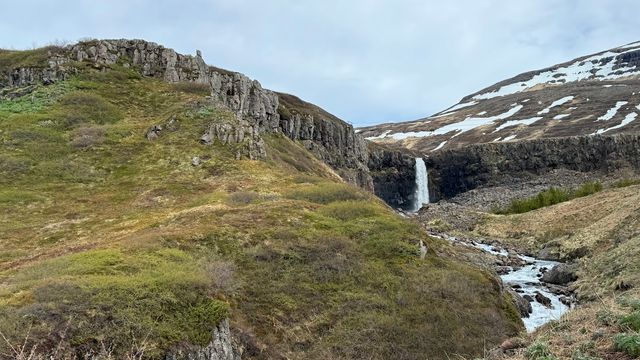


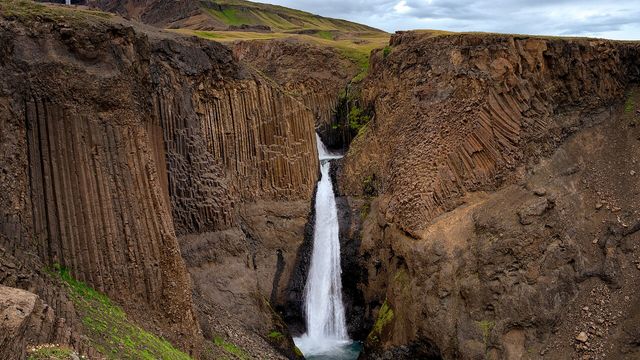
Klifbrekku Cascade Waterfalls on the map
The path is slippery when wet. The route up to the upper tiers crosses running water and springs and carries no markers at all, so losing it is easy. In snow the road in disappears under cover, and a 4x4 is not enough to make that drive safe.
Get directions

Your whole travel map in one place
Get inspired by new places around the world and find the ones worth the journey
Frequently asked questions
Do you need a 4x4 to get there?
Not in summer. The approach is about 20 km of gravel, maintained and free of loose stone, and an ordinary car copes with careful driving. Snow changes that: cover hides the road entirely, and a 4x4 does not make it safe.Can you climb up to the upper tiers?
Yes. The route crosses running water and springs, and it is not marked at any point, so losing the trail is easy. The ground is slippery when wet.Are there toilets?
No. There are no toilets at the site.Is it busy?
Rarely. The gravel detour keeps numbers low, and arriving to find nobody else at the falls is a normal outcome.Is it suitable for children?
The falls themselves are, and the walk from the car park is short. The climb to the upper tiers is not: unmarked trail, water crossings and ground that turns slippery when wet.