The National Museum of Iceland was established on 24 February 1863, with Jón Árnason as the first curator of a collection that until then had been kept in Danish museums. It went under the name Antiquarian Collection until 1911. For decades it moved between attics in Reykjavík, forty years of that in the attic of the Culture House, before settling into its present building in 1950. The permanent exhibition covers Icelandic history through about 2,000 objects, the best known of them the carved Valþjófsstaður door.
National Museum of Iceland
Local name: Þjóðminjasafnið
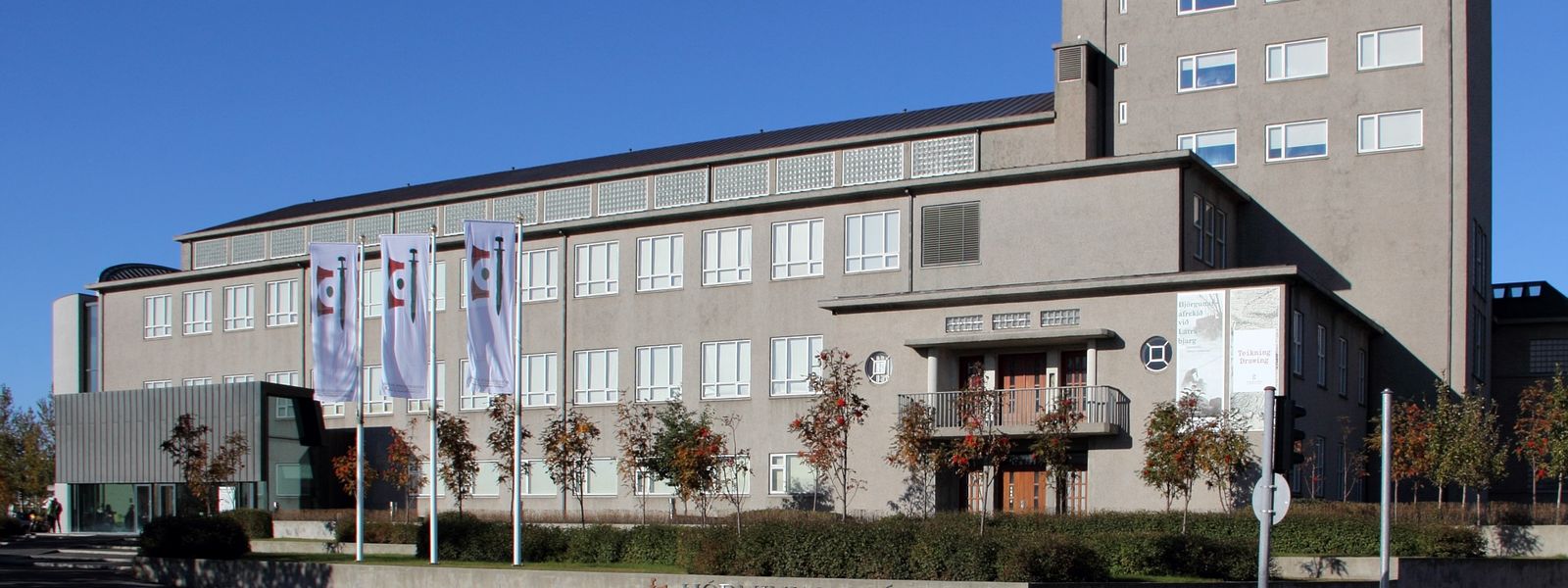
National history museum in Reykjavík, with around 2,000 objects from the Settlement Age to the present.
- Entrance
- Paid admission; seniors pay a reduced rate.
- Accessibility
- Step-free entrance, wheelchair-accessible parking and toilet, and lifts between floors for anyone who cannot manage the stairs.
- Parking
- Free car park at the museum, within about 40 m of the building and reserved for visitors; free street parking nearby as well, and wheelchair-accessible spaces.
- Difficulty
- No walk in — the car park is at the door.
- Transport
- Two bus stops named Þjóðminjasafnið, both about 80 m away.
- Advance booking
- Not needed; tickets are sold at the desk, and on a weekday there is no queue.
- Hours
- Open daily, 10:00–17:00.
- Address
- Suðurgata 41, 102 Reykjavík, Iceland
What makes it special
The Valþjófsstaður door is the object people come back to: a carved panel showing a knight killing a dragon and freeing the lion that then becomes his companion, a version of the Lion-Knight legend worked into wood.
Around it the permanent exhibition sets out about 2,000 objects running from the Settlement Age to the present — jewellery of high quality from the Settlement Era, the turn from paganism to Christianity, 20th-century photography, and an Icelandic wedding dress that a member of the museum staff recognised while visiting the Victoria and Albert Museum in London. Temporary exhibitions run alongside the permanent one. The architecture is plain, and the galleries are laid out so that the history reads in order rather than in fragments.
Good to know
- Time: the permanent exhibition runs to a few hours, so give it a proper slot in the day.
- Coats and bags: free lockers inside, so a jacket and a rucksack need not come round the galleries with you.
- Language: the displays carry English alongside the Icelandic.
- Children: there are sections pitched at different ages, and a space set aside for chess.
- Coffee and toilets: free coffee stands across from the gift shop, and there are toilets on the bottom floor.
Getting there
There is no approach to speak of. The car park sits alongside the building, within about 40 m of it and asphalt the whole way, so the last stretch of the journey takes no planning at all. By bus it is easier still: two stops carry the museum's own name, Þjóðminjasafnið, and both are about 80 m away. Drivers who find the car park full have street parking in the streets around it. Whichever way you arrive, nothing here counts as a walk in.
Best time to visit
Best: a weekday, early enough to have the day ahead of you.
Avoid: the last stretch before closing time.
On a weekday there is no queue at the ticket desk, and the permanent exhibition alone runs to a few hours — arrive late and the visit turns into a decision about what to skip. Being entirely indoors, the museum is also the obvious answer to a day of rain.
Things to do nearby
All tours in Reykjavík on GetYourGuide
Paid links: booking through them supports YowJourney.
Sun & daylight
Nearby Places



Similar Places



Your whole travel map in one place
Get inspired by new places around the world and find the ones worth the journey
Frequently asked questions
How long does a visit take?
A few hours for the permanent exhibition alone — it holds about 2,000 objects, and temporary exhibitions run alongside it.Are the displays in English?
Yes. The exhibition on Icelandic history is labelled in English as well as Icelandic.Can you get there by public transport?
Yes. Two bus stops named Þjóðminjasafnið sit about 80 m from the museum.Is it worth bringing children?
The displays are broken into sections pitched at different ages, and there is a space set aside for chess.Which single object should you look for?
The Valþjófsstaður door: a carved panel showing a knight killing a dragon and freeing the lion that becomes his companion.