The Settlement Exhibition is a museum in central Reykjavík, run by the Reykjavík City Museum. It is built around the remains of a hall from the Settlement Age, excavated on Aðalstræti in 2001 and left in place. The hall was inhabited from about 930 to 1000. A turf wall just north of it was built before the volcanic ash fall of 871, which puts it among the oldest built structures known in Iceland. Finds from other excavations in the city centre and on the island of Viðey are displayed alongside.
The Settlement Exhibition
Local name: Landnámssýningin
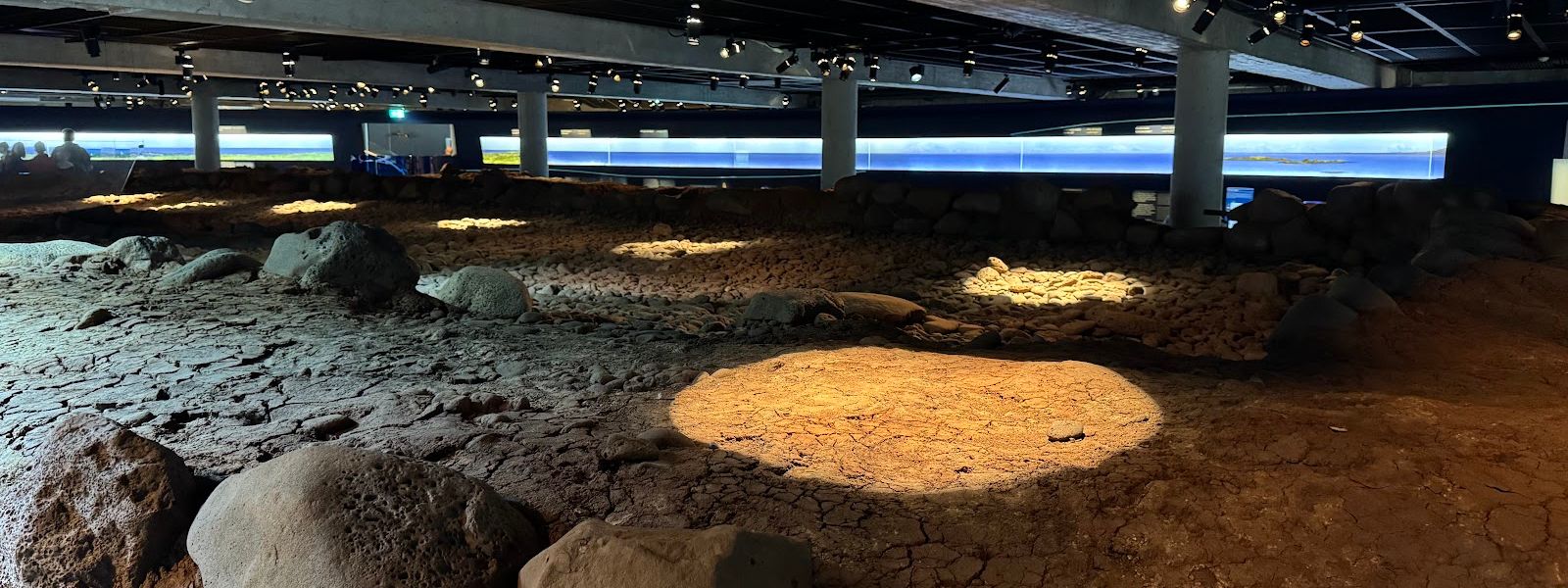
The exhibition takes its name from a layer of volcanic ash dated to 871, give or take two years: the turf wall north of the hall was already standing when that ash fell.
- Entrance
- Paid; under 18 and 67+ free
- Accessibility
- Wheelchair-accessible entrance and wheelchair-accessible toilet. No wheelchair-accessible parking at the site.
- Parking
- Paid city-centre parking
- Transport
- In the old town — a few minutes from Austurvöllur
- Hours
- Open daily, 10:00–17:00.
- Address
- Aðalstræti 16, 101 Reykjavík
What makes it special
The hall is left as it was when the archaeologists finished. Turf walls with stone at their base, two roof posts, and in the middle a fireplace, one of the largest found in Iceland. Most of the floor was trampled earth; a small timber platform at the western end is taken to be the householders' own space and sleeping area. Under the western wall lie the spine of a horse or a cow and other bones.
Around the ruin runs a dark-blue oval wall. Set into it is a photograph of the view in every direction as it is thought to have looked at the time of the settlement, and a lit strip marks the height at which the 871 ash fell. The route runs anti-clockwise, and beams of light pick out parts of the structure at the press of a button. The floor underfoot is partly sea-washed shingle and gently undulating, in the shape of the gravel ridge the house stood on.
Good to know
- Below street level. The exhibition is in a basement under the building above; the hall is shown where it was excavated, not moved.
- Time it. Allow an hour or two. Arriving shortly before closing leaves too little time for the hall and the multimedia tables.
- Children. A hands-on area holds replicas of Viking Age toys and old board games. The museum is set up for children.
- The route. Visitors walk around the hall anti-clockwise, and light beams pick out parts of the structure at the press of a button.
Getting there
The entrance is on Aðalstræti in the old centre of Reykjavík, at the corner with Suðurgata. The exhibition is not at street level. The hall lies in a basement under the building, in the spot where it was dug out in 2001, so the visit begins with a descent to the level of the excavation.
Best time to visit
Better: a wet or windy day, and early enough in the day to leave an hour or two inside. The museum opens seven days a week.
Avoid: arriving shortly before closing.
The whole exhibition is indoors and underground, so daylight, weather and season change nothing about the visit. The only variable is how much time you leave yourself for the hall, the reconstruction window and the two multimedia tables.
Things to do nearby
All tours in Reykjavík on GetYourGuide
Paid links: booking through them supports YowJourney.
Sun & daylight
Nearby Places


Similar Places




Your whole travel map in one place
Get inspired by new places around the world and find the ones worth the journey
Frequently asked questions
What is on display?
The remains of a hall from the Settlement Age, kept in the place where it was excavated, and fragments of a turf wall north of it. Objects from Viking Age excavations in central Reykjavík and on the island of Viðey are shown in glass cabinets recessed into the surrounding wall.Why is the exhibition called 871±2?
An eruption in the Torfajökull area, about 400 km to the east, spread a layer of ash across Iceland. The same ash reached Greenland and was found in drilled ice layers, which dates it to 871 with a margin of two years either way. The turf wall at the site was built before the ash fell.Is it worth taking children?
Yes. There is a hands-on area with replicas of Viking Age toys and old board games, and much of the explanation runs through touch-screens and multimedia tables rather than text panels.How long does a visit take?
An hour or two covers the hall, the reconstruction window, the two multimedia tables and the upper floors, which follow the history of Reykjavík from its foundation to recent times.