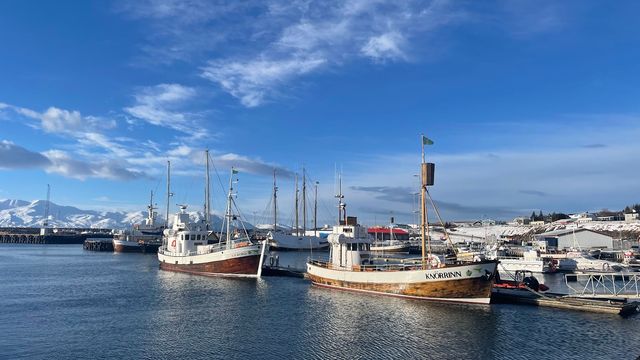
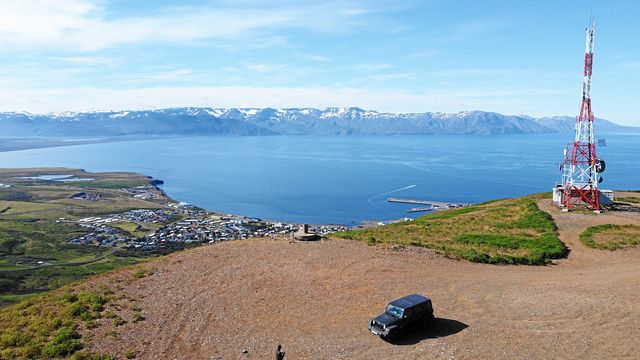
Húsavík stands on the shore of Skjálfandi bay, in Norðurþing municipality on the northeast coast of Iceland. About 2,500 people live there, on income from fishing, tourism, retail and small industry. It is the whale-watching centre of the country: whales are sighted on over 95% of trips in summer. The wooden church Húsavíkurkirkja, built in 1907, is the main landmark. Four museums sit in the town, covering whales, human exploration, the Eurovision Song Contest and local culture. Mývatn and Jökulsárgljúfur National Park are within day-trip range.
Húsavík

- Currency
- Icelandic króna (ISK)
- Language
- Icelandic; nearly all speak English
- Power plug
- Europlug and Schuko sockets, 230 V
- Visa
- Schengen; outside the EU
- Time zone
- UTC±00:00 (Atlantic/Reykjavik)
- Tap water
- Safe; hot water smells of sulphur
- Tipping
- Not customary
- Emergency
- 112
Things to do
All tours in Húsavík on GetYourGuide
Paid links: booking through them supports YowJourney.
When to go
Shoulder
Apr – May
Daylight lengthens quickly and the town is quieter than at midsummer.
High season
Jun – Aug
Whales are sighted on over 95% of boat trips from the harbour. Midnight sun runs from 11 to 29 June, and the Mærudagar festival in mid-July fills the town with visitors.
Shoulder
Sep – Oct
Days shorten fast and the summer crowds thin out.
Low season
Nov – Mar
Daylight is short. On 21 December the sun is up for 2 hours 45 minutes, from late morning to mid-afternoon, and visitor numbers are at their lowest.
How long to stay
One night covers the town itself. A whale-watching trip takes up much of a morning or an afternoon, and the museums by the harbour fill what is left of the day. Allow two or three nights if you use Húsavík as a base for Mývatn, Ásbyrgi and Dettifoss, each a separate day out by car. The Mærudagar festival in mid-July draws people from across Iceland, so book a bed well ahead for that week.
Getting around
Húsavík is small enough to cross on foot, and there is no public transport inside the town. The whale-watching boats leave from the harbour in the centre.
Strætó bus 79 links the town with Akureyri one to three times a day. On some days that means a single service, so check the timetable before you plan a return trip around it. By car Akureyri is within an hour, a drive shortened by the Vaðlaheiðargöng tunnel that opened in 2019.
Húsavík Airport lies a few minutes from town, but scheduled flights to Reykjavík ended in 2024. The nearest airport still in service is Akureyri.
Mývatn, Ásbyrgi and Dettifoss are all within day-trip range and are reached by car.
What to see



Destinations in Húsavík
Frequently asked questions
Why is Húsavík known for whale watching?
Whales of several species come into Skjálfandi bay, and the boats leave from the harbour in the town centre. Sightings are made on over 95% of trips during the summer. The Húsavík Whale Museum stands by the harbour.How do you get to Húsavík from Akureyri?
By car it is within an hour, since the Vaðlaheiðargöng tunnel opened in 2019. Strætó bus 79 covers the same route one to three times a day.Are there flights to Húsavík?
No. Húsavík Airport is close to the town, but the regular flights to Reykjavík Airport ended in 2024. The nearest airport in service is Akureyri, about an hour away by car.What is the Eurovision connection?
The 2020 Netflix film Eurovision Song Contest: The Story of Fire Saga is set in Húsavík, and one of its songs is named after the town. The song was nominated for an Academy Award and its performance was filmed here. The Eurovision Museum opened in the town in 2021.What is Mærudagar?
A festival held in the town each year in mid-July. The name translates as Candy Days. It runs on music, colourful decorations, food and drink, and thousands of people come from all over Iceland.