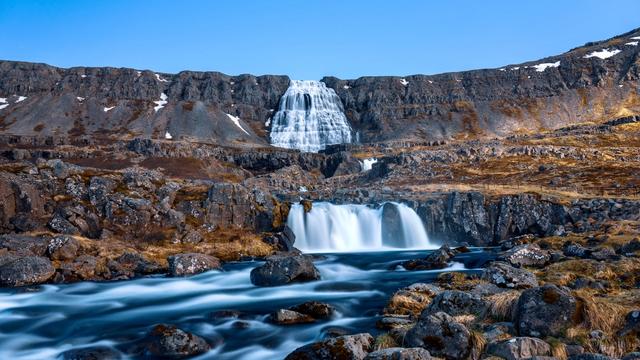
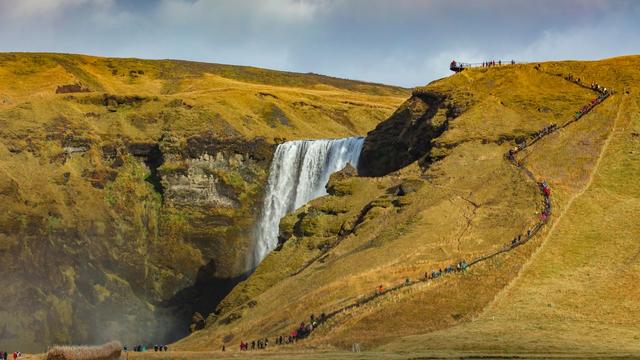
Dynjandi, also known as Fjallfoss, is a waterfall in Arnarfjörður in the Westfjords of Iceland. It falls 100 metres in total and is the largest waterfall in the region. Five further waterfalls — Háifoss, Úðafoss, Göngufoss, Hundafoss and Bæjarfoss — lie below it, and the path from the car park passes them on the way to the base of the main fall. Dynjandi and the other falls on the Dynjandisá have been protected as natural monuments since 1981.
Dynjandi Waterfall
Local name: Dynjandi

The first car road to Ísafjörður was built over the top of the falls, so the drive in crosses above Dynjandi.
- Entrance
- Free
- Accessibility
- No stairs and no railings on the path from the car park. Sections are not suitable for anyone unsteady on their feet.
- Parking
- Paid car park about 670 metres from the falls, gravel surface. A second car park lies about 1.8 kilometres away.
- Difficulty
- Uphill footpath from the car park to the base, 15 to 20 minutes each way, passing five smaller waterfalls.
- Transport
- Bus stop Dynjandi, about 640 metres from the falls.
- Address
- Dynjandi, 466, Arnarfjörður
What makes it special
The main fall is 100 metres high and wide with it, a bridal-veil sheet rather than a single column. Five more waterfalls lie below it — Háifoss, Úðafoss, Göngufoss, Hundafoss and Bæjarfoss — and the path from the car park passes each of them. The walk up delivers six falls, not one.
Dynjandi is the largest waterfall in the Westfjords. It and the other falls on the Dynjandisá have been protected as natural monuments since 1981. Coming from the direction of Ísafjörður, the whole fall appears at once as the road turns towards it.
Good to know
- Walk: 15 to 20 minutes uphill from the car park to the base of the falls, and the same back down.
- Toilets: free toilets stand near the car park. In high season they are not always clean.
- Crowds: since the road was paved, tour buses arrive and queues form on the path up and down.
- Weather: rain, sun and rainbows can all turn up inside a single visit. Bring waterproofs.
Getting there
There is no driving to the foot of the falls. The car park sits about 670 metres away, and from there a footpath climbs past the smaller waterfalls to the base of Dynjandi. Allow 15 to 20 minutes up and about the same coming down. The approach road runs over the Dynjandisheiði pass, above the top of the falls, so from that side you cross over Dynjandi before you park below it. The road is now paved.
Best time to visit
Best: June to September, when Route 60 is reliably open and the flow is strong; come early morning or evening to miss the tour-bus crowd and catch softer light.
Avoid: the busy midday window in summer if you want it quiet, and icy shoulder-season days when the upper path turns dangerous. The flow is at its fullest in early summer, as the snow melts.
Sun & daylight
Nearby Places


Similar Places



Featured in our guides
Dynjandi Waterfall on the map
The path to the falls has no stairs and no railings. Sections of it are not suitable for anyone unsteady on their feet, and the descent is on the same ground.
Get directions

Your whole travel map in one place
Get inspired by new places around the world and find the ones worth the journey
Frequently asked questions
How long does the walk to the waterfall take?
Fifteen to twenty minutes from the car park to the base, on a path that climbs past the smaller falls. Allow the same again coming down.How tall is Dynjandi?
One hundred metres in total, which makes it the largest waterfall in the Westfjords. Five smaller falls stand below it.Is the path hard going?
Parts of it are. There are no stairs and no railings, and some sections are not suitable for anyone unsteady on their feet.Is Dynjandi crowded?
It can be. The road is now paved, and tour buses and cruise excursions bring queues on the path on busy days.Is Dynjandi the same waterfall as Fjallfoss?
Yes. Dynjandi is also known as Fjallfoss.